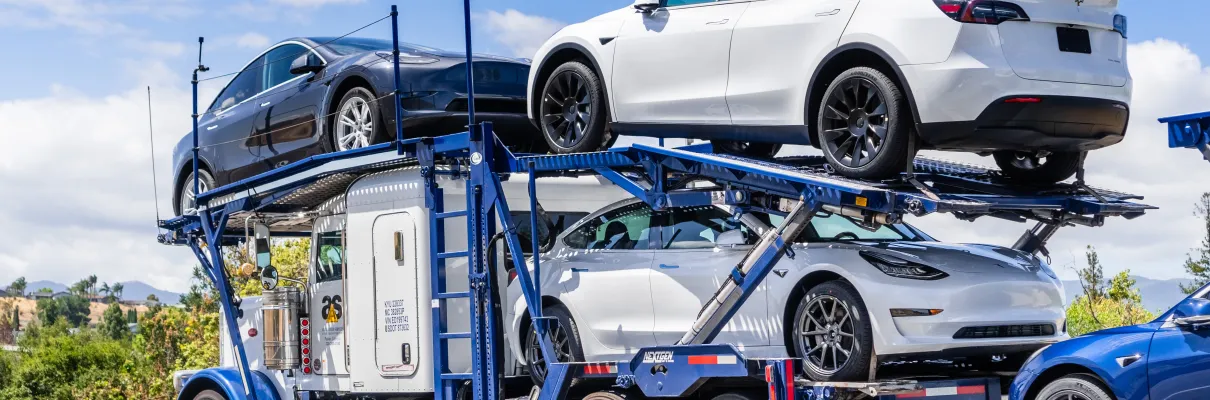

Everyone shipping a car wants their vehicle to arrive at its destination as quickly, conveniently, and safely as possible, so you must understand the differences between terminal-to-terminal vs door-to-door car shipping.
Door-to-door shipping helps drivers maximize the speed, convenience, and even safety of their auto transport service—but these perks come at an added cost. This guide evaluates door-to-door car shipping and terminal-to-terminal car shipping, along with the pros and cons of each, so you can determine whether the extra cost makes sense for you. While most ship their vehicle using door-to-door transport, terminal-to-terminal is a better fit for some, so keep reading to find your best option.
How Door-to-Door Car Shipping Differs from Terminal-to-Terminal
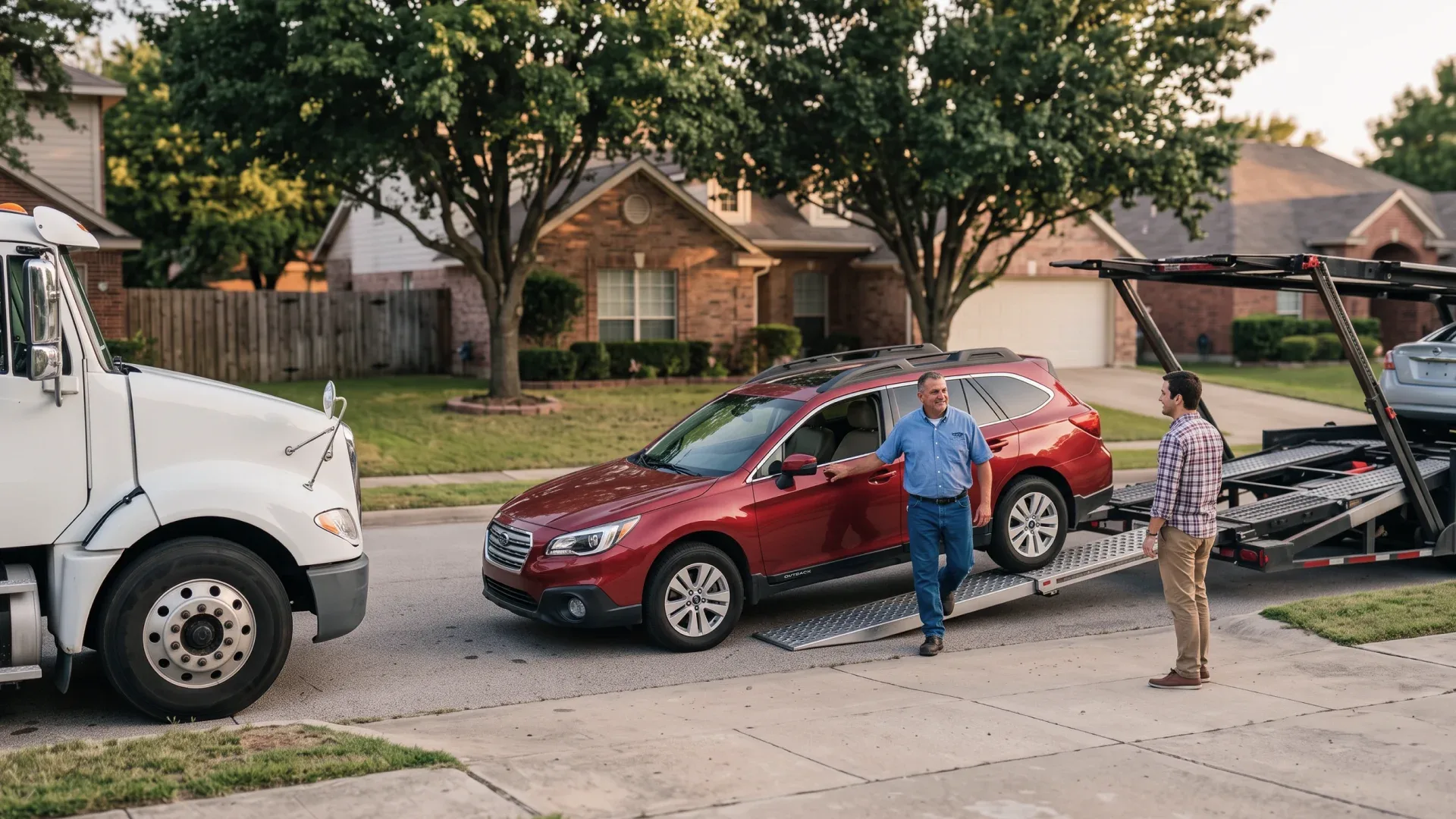
Door-to-door shipping involves a customer choosing a pick-up and drop-off point for their car's transport. Common door-to-door shipping locations include a person's home, office, or another convenient site, such as a local mall parking lot.
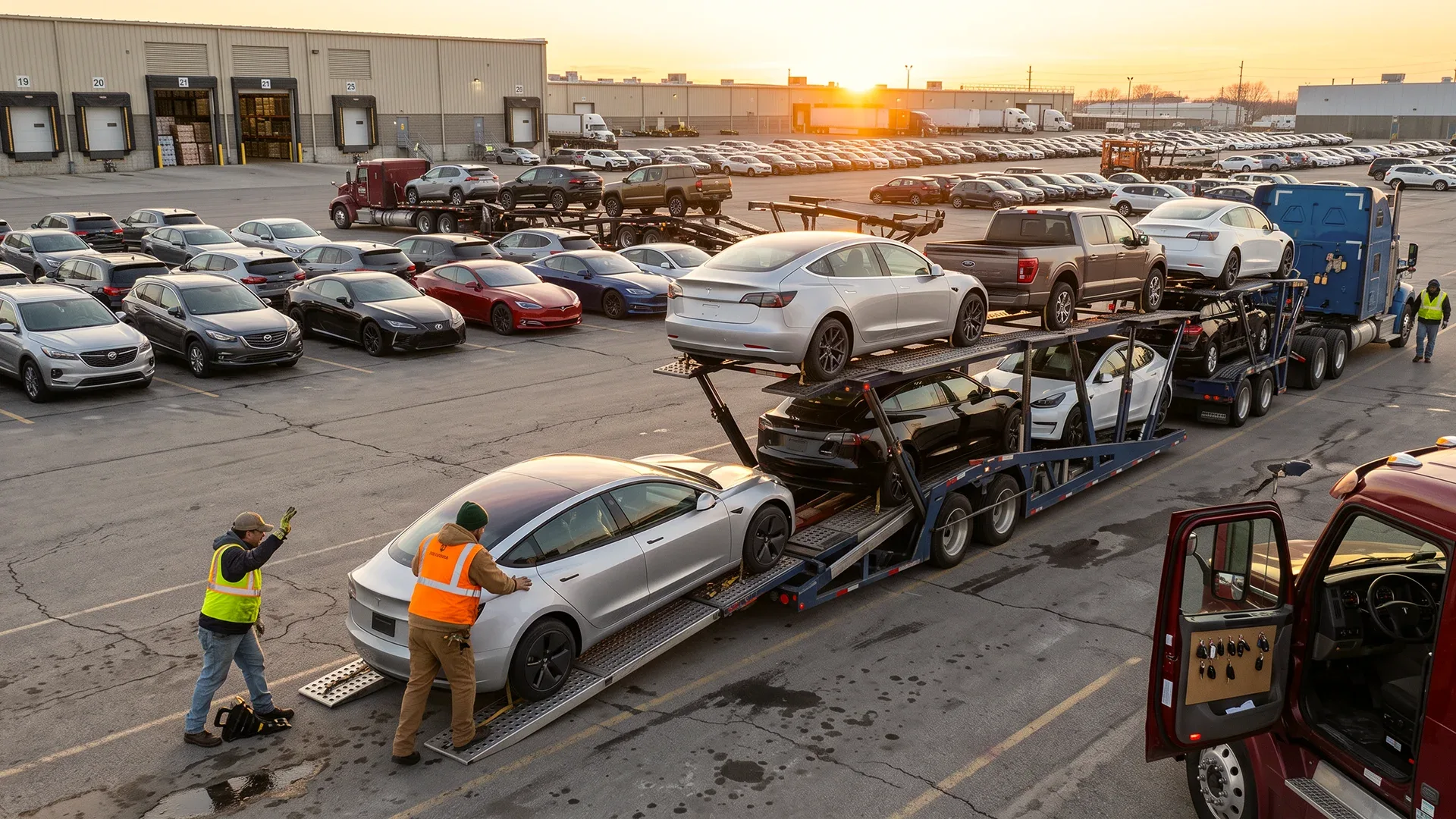
On the other hand, with terminal-to-terminal car shipping, the customer drops off and picks up their vehicle at a terminal used by the transportation industry. There are nearly 600,000 motor carriers registered with the Federal Motor Carrier Safety Administration, so terminals are found across the country, though they are often located in industrial areas outside city centers. Terminal-to-terminal shipping is generally less convenient for the customer because they need to drop off the car at the origin terminal and pick it up at the destination terminal.
Generally, customers must wait 24 hours after their vehicle reaches the terminal before they can pick it up and pay storage fees if it is not picked up in a timely manner. You should also understand that terminals are not built or staffed to provide a polished customer experience. However, terminal-to-terminal shipping may be your only option if your schedule does not allow you to be available during the door-to-door drop-off and pick-up windows.
Door-to-Door Vehicle Shipping Pros and Cons
Let’s look at the door-to-door car shipping pros and cons in more detail to help you determine which option fits your needs.
Pros of Door-To-Door Shipping
Door-to-door vehicle shipping is generally faster than terminal-to-terminal, which partly explains why the service is more costly. With door-to-door shipping, you specify the locations where you’d like your vehicle picked up and dropped off. In addition, you:
Choosing the pick-up and drop-off locations, often coordinating the timing of these exchanges.
Do not need to arrange a ride to or from the terminal at drop-off or pick-up.
Typically have a dedicated representative who provides direct communication throughout the shipping process for added support.
Another benefit of door-to-door shipping is that it reduces the amount of handling your vehicle experiences during the process, which reduces the potential for damage. Door-to-door shipping involves
fewer stops and eliminates the need for handling at a terminal and potential storage periods. In addition, enclosed carrier transport services almost always involve door-to-door shipping, given the higher cost and the nature of the vehicles shipped.
Cons of Door-To-Door Shipping
The primary downside of door-to-door shipping is that it costs more than terminal-to-terminal car shipping. Most industry sources indicate that door-to-door auto transport costs 10 to 30% more than terminal-to-terminal service because the carrier:
Travels longer distances and may spend more time in traffic, especially in urban areas
Picking up or dropping off a car in more remote locations forces the carrier to leave the beaten path of in-demand routes to urban regions or major highways.
Although the US has more than 4 million miles of roads, only 25% are suitable for heavy trucks. As a result, the vehicle shipping company may need to use an alternate nearby delivery, slightly reducing the service’s convenience. This situation occurs due to local road restrictions, such as narrow streets, low-hanging trees, tight turns, or limited parking. Also, open carriers tend to be larger than enclosed carriers, so drivers using open carriers are more likely to encounter accessibility issues.
Get a car shipping quote in seconds! https://nexusautotransport.com/car-shipping-calculator/
When Is Door-To-Door Shipping Worth It?
Your schedule requirements, route distance, and vehicle value are three primary factors that can affect the value of door-to-door shipping for you.
Scheduling: Terminals have fixed business hours that may conflict with your scheduling needs. While a door-to-door service generally can't provide a specific pick-up or delivery time, you should receive a scheduling window allowing for a more streamlined process.
Route Distance: If you’re shipping a car to another state or across the country, it simplifies the process and generally delivers the vehicle more quickly.
Vehicle Value: When shipping a higher-value vehicle, door-to-door shipping is advisable to reduce the risk of damage from additional handling during terminal-to-terminal service.
Still, terminal-to-terminal shipping may be better if you prioritize savings over convenience, flexible drop-off or pickup windows, or live in a remote area.
Terminal-to-Terminal vs Door-to-Door Car Shipping
As with most choices consumers make, whether to choose terminal-to-terminal or door-to-door car shipping should primarily depend on your needs and budget. Terminal-to-terminal car shipping has a lower upfront cost but is less convenient and may incur additional costs for arranging travel to the terminal. Door-to-door shipping also tends to be quicker, and there are fewer opportunities for your car to incur damage. Nevertheless, door-to-door shipping can be the best option available, depending on your circumstances.
Door-to-Door Car Shipping: Common Delivery Access Scenarios
Scenario | What It Means for Delivery | Typical Workaround |
Narrow residential streets | Truck may be too wide, especially with parked vehicles and trash cans | Driver and customer arrange drop-off at nearby location, such as a shopping mall parking lot |
Gated communities | Carrier needs access code and permission | Provide all details prior to delivery and confirm with HOA or gate attendant |
Low-hanging trees or tight turns | Carrier may need assistance navigating through high foliage | Likely will want to find a nearby meetup, unless a police escort can be arranged |
Limited parking areas | Typical carrier trucks are larger than a single parking space | Check if there’s street parking allowed for loading/unloading, otherwise meetup |
Remote pickup or drop-off locations | Rural routes can usually be accommodated | Carrier should be fine unless dirt road after heavy rain or unplowed after snow |
FAQs
What happens if my street or neighborhood is not accessible for door-to-door car shipping?
Door-to-door service is the industry norm, but the truck and trailer may be unable to access your pick-up or delivery location due to legal or physical restrictions. Deliveries in rural and more open suburban areas tend to be easier than those in urban areas. In cases where access is an issue, the driver will arrange to meet you at a nearby shopping mall or another open area for pickup or delivery.
How long can a car remain at a terminal before pickup, and are storage fees possible?
Most terminals provide free storage for 3 to 7 days, after which storage fees of $15 to $50 per day kick in. Most terminals allow drop-off and pick-up during standard business hours, excluding weekends, but you should confirm your terminal’s policies in advance.
How do I find a terminal location for car shipping near me?
The best way to find a terminal near you is to ask the carrier or broker. Major carriers often have their own terminals that you can find by searching the web. Some carrier websites allow you to enter a ZIP code to find nearby terminals.
When does terminal-to-terminal shipping make more sense for remote or hard-to-reach locations?
Terminal-to-terminal shipping may be the best choice if your origin or destination location is difficult to reach, especially for a heavy-duty truck hauling a car carrier. If you live in a remote area with winding roads or roads and bridges that are not built to handle heavy trucks, terminal-to-terminal shipping may be right for you. Likewise, those living in the centers of major cities may benefit from terminal-to-terminal shipping.
Which option usually involves more vehicle handling during transport?
Door-to-door shipping requires less vehicle handling. Door-to-door shipping often requires the vehicle to be handled twice: once during loading and once during drop-off. With terminal-to-terminal shipping, the vehicle is loaded onto a truck at the terminal. It can then be taken to another terminal, where it is unloaded and loaded onto another carrier; similar transfers can occur multiple times. Finally, your vehicle will be unloaded at the destination terminal.