
Shipping a car from California to Oklahoma usually means covering roughly 1,300 to 1,600 highway miles between pickup and delivery, depending on the cities involved. For most customers, that makes professional transport a practical alternative to spending several days driving the car yourself.
The basic process is straightforward. You choose a pickup window and transport type, prepare the vehicle, meet the carrier in California and inspect the car again when it arrives in Oklahoma. The details that affect your price and schedule are the exact locations, vehicle size, time of year and whether you choose open or enclosed transport.
Customers beginning a move can also review Nexus information about shipping vehicles from California before requesting a route-specific quote.
How Much Does It Cost to Ship a Car from California to Oklahoma?
If you're asking how much to ship a car from California to Oklahoma, there isn't one useful statewide number. A Los Angeles-to-Oklahoma City shipment is a different job from moving a pickup truck from far Northern California to a small town in eastern Oklahoma.
Current published market estimates put many California-to-Oklahoma shipments roughly in the $1,000 to $2,000 range, although individual quotes can fall outside it. Open transport for a standard sedan on a well-traveled route generally lands toward the lower end. Enclosed shipping, oversized vehicles, rural pickup points and tight schedules tend to move the price higher.
Mileage establishes the starting point when you ship a car from California to Oklahoma, but carriers also have to consider how easily your vehicle fits into an existing route. A pickup in Los Angeles, San Diego or another large California market usually gives a carrier more opportunities to combine your car with other vehicles than a pickup well away from a major highway.
For pricing tied to your specific vehicle and ZIP codes, use the instant car shipping quote calculator. That is more useful than planning around an average that may have little in common with your actual shipment.
California-to-Oklahoma Car Shipping Factors
Factor |
How It Affects Shipping |
What the Customer Should Consider |
|---|---|---|
Distance and Route |
Most Southern California shipments can follow major eastbound corridors, while Northern California pickups may add mileage before the carrier turns toward Oklahoma. |
Compare your actual pickup and delivery ZIP codes rather than relying on a statewide average. |
Transport Type |
Open carriers are widely available and normally cost less. Enclosed trailers carry fewer vehicles and command a premium. |
Enclosed transport may make sense for a classic, exotic or especially valuable car. |
Vehicle Size and Condition |
Larger vehicles take more trailer space. A non-running car can require a winch or other loading equipment. |
Give the correct make, model, dimensions and operating condition when requesting the quote. |
Season and Carrier Availability |
Demand changes during the year, and weather can alter highway schedules. |
A little flexibility with pickup dates can provide more carrier options. |
How Long Does California-to-Oklahoma Car Shipping Take?
For a trip of this length, the highway portion commonly takes several days after pickup. A reasonable planning range for many California-to-Oklahoma routes is about three to seven days in transit, but that isn't a guaranteed delivery window.
The carrier may have other vehicles to pick up and deliver along the way. Traffic, road construction, weather and required driver rest periods can also change the schedule.
If you're relocating and need the vehicle for work, school or another fixed commitment in Oklahoma, don't plan around a best-case delivery date. Build some breathing room into the move.
The Federal Motor Carrier Safety Administration (FMCSA) limits how long commercial drivers can remain behind the wheel and requires off-duty periods. Its hours-of-service rules help explain why a long-distance auto shipment can't simply be driven straight through from California to Oklahoma.
What Route Will the Carrier Take?
The actual route depends on the pickup point, delivery location, weather and the carrier's other scheduled vehicles. For shipments originating in Southern California, Interstate 40 provides a major east-west route through Arizona and New Mexico into the Texas Panhandle before reaching Oklahoma.
Northern California shipments may travel south or southeast before joining a major corridor. That extra positioning can influence both mileage and carrier availability.
Time of year matters as well. California mountain routes can see snow and chain controls in winter. The California Department of Transportation advises commercial drivers and other motorists to check current conditions because restrictions can change quickly during storms. Customers shipping during winter can use Caltrans current highway information to see whether weather is affecting major California routes.
Once the vehicle is on the carrier, route changes are normally the driver's concern rather than yours. Their effect on your move is primarily timing.
Open or Enclosed Transport?
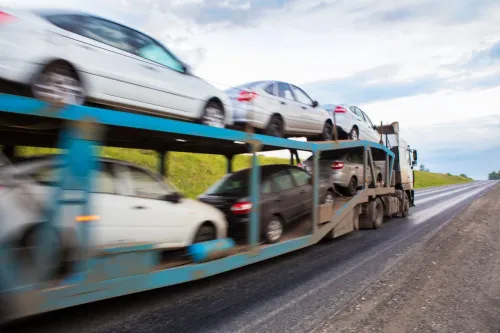
Most everyday cars make this trip on an open carrier, the familiar two-level trailers commonly seen on interstate highways. Open shipping is widely available and usually the more economical choice.
Enclosed transport surrounds the vehicle during the trip and reduces its exposure to weather and road debris. It costs more because enclosed trailers carry fewer vehicles and there are fewer enclosed carriers in the market.
That added expense may be worthwhile for a restored classic, exotic car, expensive collector vehicle or a car with a finish you don't want exposed during a 1,000-plus-mile trip.
For an ordinary late-model sedan, crossover or pickup, open transport is generally the practical choice. The decision isn't about whether one method is "safe" and the other isn't. It's about how much additional protection is appropriate for the particular vehicle.
Preparing Your Car for Pickup in California
You don't need to perform major mechanical work simply because the car is going on a carrier, but a few basic preparations make pickup easier.
Wash the exterior well enough to see existing scratches and dents. Take your own photos before the carrier arrives, preferably in good daylight. The driver will inspect the vehicle at pickup and record its condition on the bill of lading, the document used to record the shipment and vehicle condition.
Leave about one-quarter tank of fuel. The vehicle needs enough gas to be moved during loading and unloading, but there's no benefit to sending it with a full tank.
Remove loose items, valuables and personal belongings unless the carrier has specifically agreed to transport something inside the vehicle. Deactivate toll transponders, secure removable accessories and make sure the driver knows about any mechanical issue that could affect loading.
If the car doesn't run, say so before booking. An inoperable vehicle isn't necessarily a problem, but the carrier needs to arrive with the right equipment.
Pickup in California and Delivery in Oklahoma
You or another designated adult needs to be available when the carrier takes possession of the vehicle. Review the inspection carefully and keep your copy of the bill of lading.
Once the car is moving, Nexus Auto Transport can provide shipment updates as information becomes available from the assigned carrier.
At the Oklahoma end, door-to-door service means the driver will get as close to the requested address as the truck can safely and legally travel. A large transporter may not be able to enter a narrow residential street, apartment complex or area with low trees and tight turns. In that case, you'll arrange a nearby meeting point where the carrier has room to unload.
Before signing the final paperwork, walk around the vehicle and compare its condition with the pickup inspection. It's easier to address a discrepancy while the vehicle and paperwork are still in front of you.
For more information about the destination side of the move, Nexus provides a dedicated Oklahoma shipping resource.
FAQs
Can I leave personal items inside my car when shipping from California to Oklahoma?
Personal belongings should generally be removed unless the assigned carrier has approved them in advance. Items inside the vehicle can add weight, may not be covered by the carrier's cargo policy and can create problems during pickup. Ask before packing anything in the trunk or passenger compartment.
How should I prepare my vehicle for transport from California to Oklahoma?
Clean the car, photograph its condition, leave about one-quarter tank of fuel and remove valuables and loose belongings. Secure removable accessories and deactivate toll tags or transponders. If the car leaks fluids or has another mechanical problem, tell the transport company before pickup.
Can I ship an inoperable vehicle from California to Oklahoma?
Yes. A non-running vehicle can be shipped, but it needs a carrier equipped to load it, typically with a winch. Tell Nexus that the vehicle is inoperable when requesting the quote so the correct equipment can be arranged. Extra handling can increase the price.
Do I need to be present when my vehicle is delivered in Oklahoma?
You don't personally have to be there, but an adult you designate must be available to receive the car, inspect it and sign the delivery paperwork. Give the transport company that person's name and contact information ahead of time.
Plan Your California-to-Oklahoma Shipment
The easiest way to plan a California-to-Oklahoma move is to start with the actual vehicle, ZIP codes and dates rather than a statewide average. That will tell you more about the likely cost, carrier availability and realistic delivery timing.
When you know your approximate pickup date, request an Instant Quote and compare the options for your specific route.
Get instant car shipping quotes for California car shipping service.