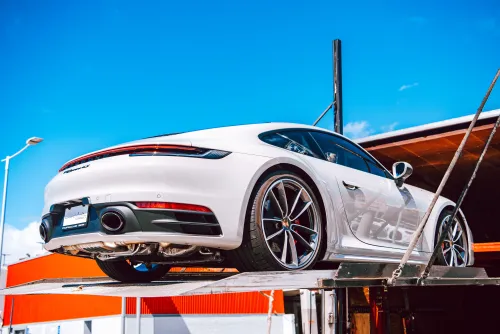

Most passenger vehicles can be shipped overseas, but getting a car onto a ship is only part of the equation. The destination country must also allow the vehicle to be imported, and the car has to meet the requirements of the ocean carrier, port and customs authorities involved.
That distinction matters when you're researching what cars can be shipped to other countries. An older SUV, modified pickup or electric car may be perfectly suitable for ocean transport but still face restrictions when it reaches the destination country.
Nexus Auto Transport can arrange the U.S. ground shipping of the trip, including pickup from a home, dealer, auction or other location and delivery to the appropriate port. Nexus does not provide the international ocean or air shipment itself. For the overseas portion, you'll need an international vehicle shipper, freight forwarder or other qualified provider.
Start With the Import Rules, Not the Car
Before deciding how to ship a vehicle, find out whether the destination country will let you bring your car in.
Requirements vary considerably. Some countries restrict vehicles based on age, emissions, steering configuration, safety equipment or other standards. Import duties and taxes can also depend on the car's value, engine size, age or country of origin.
The Federal Maritime Commission's guidance on shipping a vehicle overseas recommends checking both U.S. export requirements and the destination country's import rules before arranging transportation. The FMC also advises consumers to determine who will handle customs clearance and to make those responsibilities clear in the shipping agreement.
Once you know the vehicle is eligible, you can choose the ocean shipping method that fits the car and your budget.
For example, Chile and Ecuador both have rules about a car’s age limit. Anything over 5 years old isn’t getting in. Colombia has a total ban on used or temporary private vehicle imports. Other countries have rules about bio-security, such as New Zealand requiring pressure washing to remove any mud, seeds, or insects. Always research the country of destination before considering international car shipping.
Everyday Cars, SUVs and Pickup Trucks
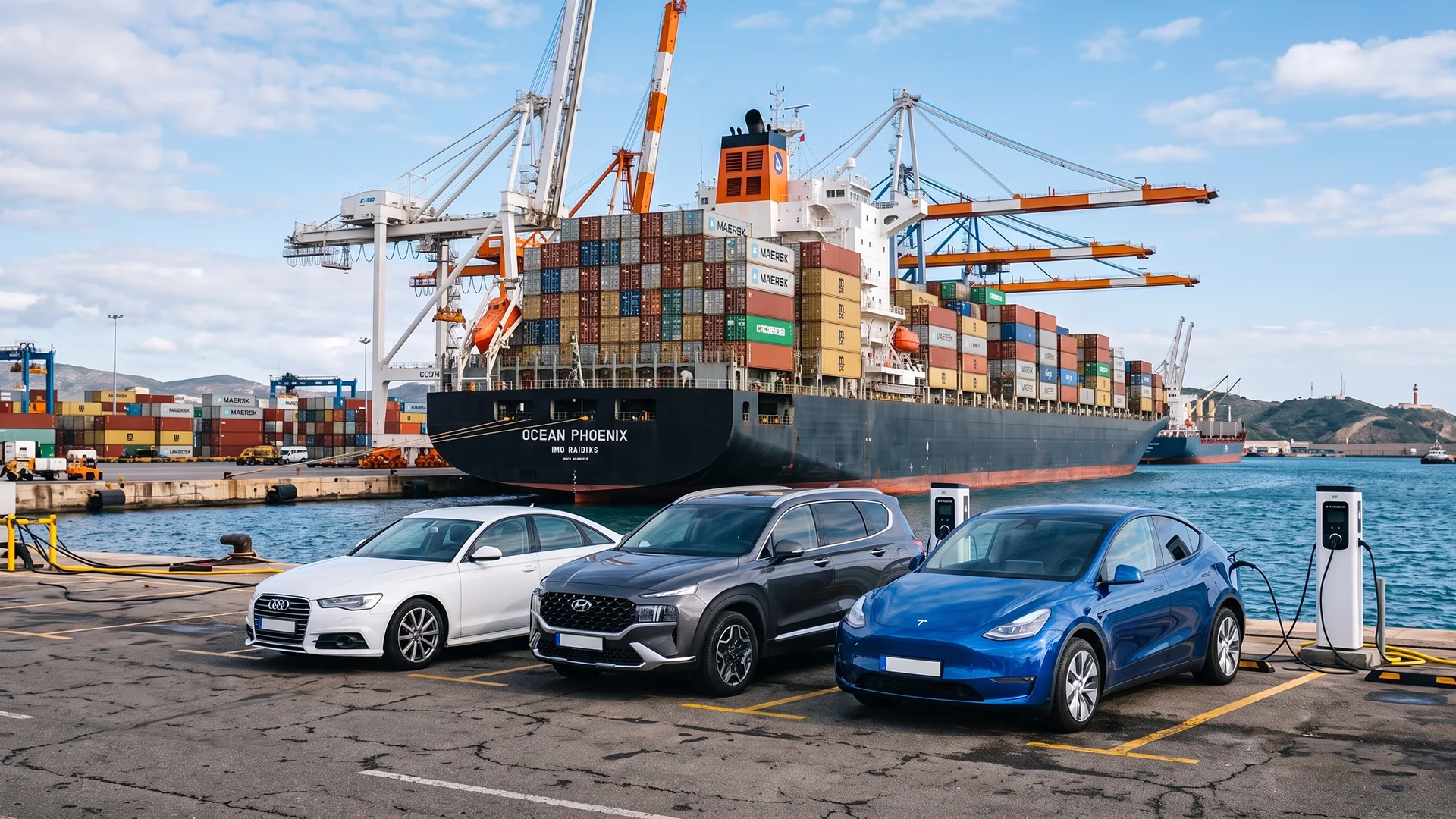
Standard passenger cars are among the simplest vehicles to move internationally. Sedans, hatchbacks, crossovers and most factory-spec SUVs can generally travel by roll-on/roll-off vessel or inside a shipping container.
The first U.S. leg looks much like any other international car shipping move to a port. A domestic auto carrier picks up the vehicle and transports it to the terminal specified by your overseas shipping company.
Pickup timing matters because ports and ocean carriers have their own receiving schedules. The car may need to arrive before a documentation cutoff rather than simply before the vessel sails.
A full-size pickup or large SUV can also be shipped, although its dimensions may affect both inland transportation and the ocean freight price. Confirm the vehicle's exact length, width, height and weight rather than relying only on its model designation.
Classic and Collector Cars
Older vehicles are routinely transported internationally, but they deserve extra planning.
Experienced transport drivers can ship classic vehicles to the departure port using open or enclosed domestic transport. For a restored, rare or highly original car, enclosed transport is usually worth considering for the U.S. portion because it protects the vehicle from road debris and weather exposure on the way to the terminal.
The overseas decision is separate. Some owners choose container shipping because the car can be secured inside a closed container rather than driven onto and off a RoRo vessel.
Import eligibility can be especially important with older cars. A vehicle's age may qualify it for exemptions in one country while preventing its importation into another. Sort that out before paying for transportation.
Luxury, Exotic and High-Value Vehicles
Protection becomes a bigger part of the decision when you're shipping a high-value car.
For the trip to the port, enclosed auto transport can reduce exposure to weather, road debris and other hazards associated with an open trailer. At the port, an exclusive container may offer greater control than RoRo or a shared container because the vehicle occupies a dedicated container and can be secured for the ocean crossing.
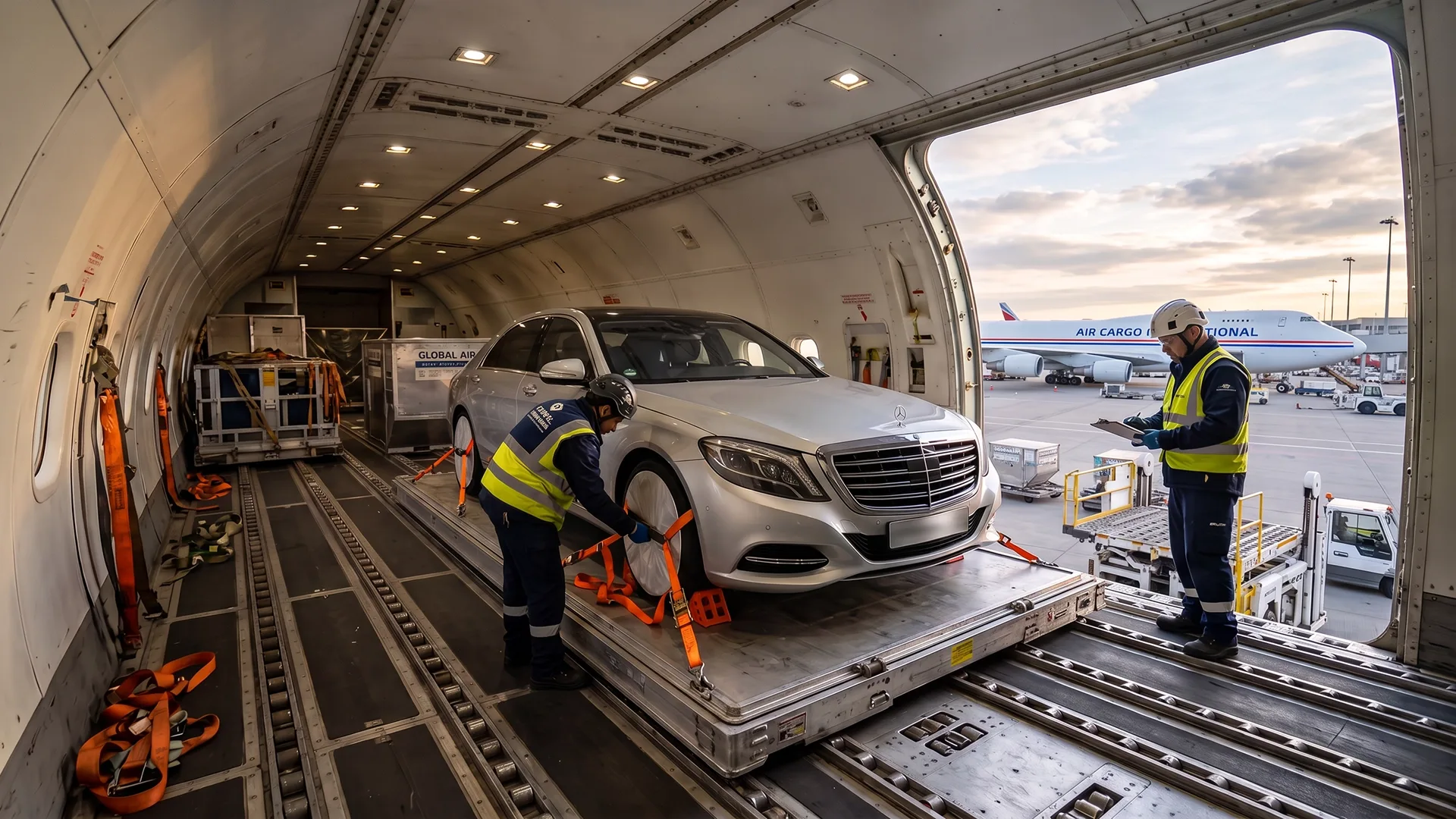
Air freight is another possibility for particularly valuable vehicles, but its cost is far higher than ocean transportation. It tends to make sense only when the vehicle's value, rarity or time requirements justify the expense.
Don't assume a domestic auto policy or domestic carrier cargo policy continues to protect the car after the ocean carrier takes custody. Ask the international shipper what marine cargo coverage is available and exactly when that coverage begins and ends.
Electric and Hybrid Vehicles Need Additional Planning
Most electric and hybrid vehicles can be transported internationally, but lithium-ion batteries introduce requirements that don't apply to a conventional gasoline vehicle.
Before booking, find out:
- Whether the ocean carrier accepts battery-electric and plug-in hybrid vehicles on the selected service.
- What battery state of charge the carrier requires at terminal delivery.
- Whether the vehicle has battery damage, warning messages or a history of thermal problems that must be disclosed.
- Whether a damaged or non-running EV requires special handling.
- What documentation the ocean carrier wants for the battery or vehicle.
- Whether destination-country rules place additional requirements on used EV imports.
These requirements can change with the carrier, route and destination. Check the instructions for the specific shipment instead of relying on what applied the last time.
Oversized and Modified Vehicles
Oversized vehicles can be shipped internationally, but their dimensions may rule out some transport methods.
The vehicle's size and weight can affect the type of domestic carrier needed, the amount of trailer space it occupies and the method used for the ocean crossing.
A vehicle that won't fit safely inside a standard container may require RoRo service or specialized handling. Accurate measurements are much more useful than simply telling a shipper that the vehicle is "oversized."
Can You Ship a Non-Running Vehicle Overseas?
Yes, although your shipping options may be more limited. Standard RoRo service generally favors vehicles that can be driven on and off the vessel, while container shipping may be better suited to an inoperable car.
The domestic carrier taking the vehicle to the port also needs advance notice. A non-running vehicle may require a winch or other loading equipment.
For the U.S. trip to the port, Nexus can help determine whether open, enclosed or specialized inoperable-vehicle transport is appropriate.
International Car Shipping Methods Comparison
Shipping Method |
Best Suited For |
Average Cost Level |
Key Safety Requirement |
|---|---|---|---|
Roll-on Roll-off (RoRo) |
Running everyday cars, SUVs and trucks |
Lower |
Vehicle must meet the carrier's operating and preparation requirements |
Shared Container |
Cars whose owners want container protection without paying for the entire container |
Low to medium |
Vehicle must be professionally secured and accepted for consolidated loading |
Exclusive Container |
Classics, luxury cars, high-value vehicles or customers wanting a dedicated container |
Higher |
Correct blocking, bracing and tie-down procedures |
Air Freight |
Extremely valuable, rare or time-sensitive vehicles |
Very high |
Strict airline cargo acceptance, preparation and dangerous-goods requirements |
RoRo, or roll-on/roll-off, is generally used for vehicles that can be driven onto and off the ship. Container options may be described as FCL (full container load) when a container is dedicated to one shipment or LCL (less than container load) when space is shared or consolidated with other cargo. Availability varies by shipper and route.
Get the Paperwork in Order Before Port Delivery
International vehicle shipping requires additional export documentation. Depending on the shipment, that can include proof of ownership and Electronic Export Information (EEI) filed through the Automated Export System (AES).
Review the current CBP motor vehicle export requirements and get the required document list and deadlines from your international shipper before the vehicle reaches the port.
Your international shipper may also issue an ocean Bill of Lading covering the overseas shipment. It is separate from the Bill of Lading used by the domestic auto carrier
Build the Port Handoff into Your Schedule
Allow enough time for the vehicle to reach the terminal before its receiving and document deadlines. Missing a port cutoff could mean missing the scheduled vessel.
When planning the domestic delivery timeline, work backward from the date your international shipper requires the vehicle at the port rather than the vessel's sailing date.
Nexus can arrange transportation from the U.S. pickup location to the designated port and help coordinate the handoff. Your international shipping provider handles the overseas portion of the move.
FAQs
Can I ship a car internationally if it has an active financial lien?
Possibly. You may need written authorization from the lienholder before the vehicle can leave the United States. Ask both the lender and your international shipper what documentation is required.
What specific customs documentation is required at the port of departure?
Requirements vary, but commonly requested documents include the title or other proof of ownership, identification, vehicle registration, VIN information and AES/EEI filing details, including the ITN when required. U.S. Customs and Border Protection and the departure port set the final requirements.
Who handles the payment of import duties and taxes at the destination port?
The importer or consignee usually pays them, unless the shipping agreement says otherwise. Because the destination country sets these charges, ask your international shipper or customs broker what will be due and when it must be paid.
How does international marine insurance differ from standard domestic transit coverage?
Domestic cargo coverage applies while the vehicle is being transported within the U.S. Marine cargo insurance covers the overseas portion and may have different limits, deductibles and exclusions.
Get Your Vehicle to the Port
Shipping a car overseas is easier when you treat it as a series of separate steps. First, determine whether the destination country will accept the vehicle. Then choose the appropriate ocean or air service, get the export paperwork in order and schedule the domestic move so the car reaches the port before its cutoff.
Nexus can handle that U.S. transportation leg and coordinate an appropriate carrier for the trip to the port. When you're ready to plan the pickup, use the Instant Quote tool to estimate the domestic transport portion of your move.