
Identifying the most iconic cars of all time is a challenging task. It is akin to identifying the best baseball, basketball, or football teams of all time, when teams of different eras played under different rules and equipment. Likewise, people and state DMVs also struggle to define what constitutes a classic, vintage, or antique, though one well-grounded estimate showed there were 9.4 million vehicles on the road in 2020 that were 30 years or older.
Of course, while age may be one element of determining which cars are iconic, others are more important. For my top 10 greatest cars of all time, I’ve tried to answer the question through the eyes of an American car enthusiast today. These are people who attend auto shows, have or have had posters of cars on their bedroom walls, and who appreciate the contributions of the global car industry, not just Detroit. Whether this list meets that challenge is for you to decide.
So, considering each vehicle’s design, engineering, and cultural impact, here’s my list of 10 legendary cars that have stood the test of time.
1. Ford Mustang
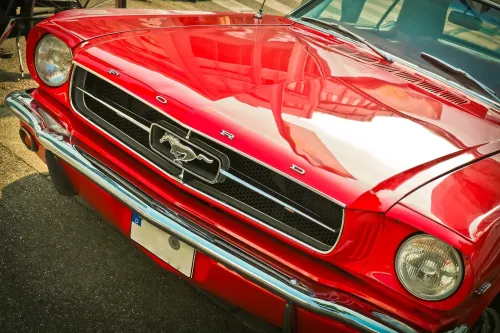
There is no more American car than Ford’s Mustang. Unveiled at the 1964 World's Fair in New York, dealers were so overwhelmed that customers slept in showrooms and bid above sticker price on the spot. They sold 22,000 on the first day they were available. Lee Iacocca's design created something the public didn't know it wanted: a long-hood, short-deck sports car priced like a family sedan, available in a range of configurations.
Besides Carroll Shelby's GT350, we saw Steve McQueen's Highland Green fastback in Bullitt, which did more for the model than its advertising. Across six generations and sixty years in production, the Mustang has remained continuously relevant, as innumerable models have come and gone, placing it among the best cars of all time.
2. Chevrolet Corvette
General Motors gave America a sports car in 1953, when Belgium-born Zora Arkus-Duntov created a car that not only looked fast, but was fast. It also handled responsibly and shed Detroit's 1950s formula for comfort and chrome.
The second-generation Sting Ray of 1963 had hidden headlights, a split rear window, and independent rear suspension. It remains one of the most beautiful shapes an automotive designer has ever drawn.
Every generation made a statement, whether it was the aggressiveness of the C4 ZR1 or the mid-engine C8 that gave America a Ferrari-fighter at a Chevrolet price. For American enthusiasts, the Corvette is proof that world-class performance is not exclusively European.
3. Lamborghini Countach
The Countach was literally the poster child of the 1970s or 1980s. Marcello Gandini's design was aggressively futuristic when it debuted in 1971: the low wedge shape, the scissor doors swinging upward and forward, and the wide haunches.
Lamborghini built the Countach for nearly two decades. Each version doubled down on the excess. Despite being less than a pleasurable driving experience, the Countach wasn't about the journey; it was about arriving at the destination where strangers nearly always stopped to stare at it.
4. Porsche 911
The 911 is a car that serious enthusiasts with deep pockets eventually drive. Its familiar proportions, given to us by Ferdinand "Butzi" Porsche in 1963, have not been fundamentally altered.
Besides the magical design is the driving experience. The flat-six behind the rear axle produces Porsche's unique sound, and the steering gives the sense that the car is responding to your inputs rather than simply processing them.
We've seen the 911 in multiple styles that all scream 911, with followers of each claiming it's among the best cars of all time. It's the car people buy after owning everything else.
5. Aston Martin DB5
Before being fitted with gadgets for Goldfinger in 1964, the DB5 was already one of the most desirable automobiles on earth. A hand-built British grand tourer with an aluminum body with Italian styling, powered by a twin-cam inline-six.
Sean Connery and that silver car created one of Hollywood's great automotive partnerships and helped usher in today's product placement industry. Bond made the Aston Martin famous on the western side of the Atlantic, and enthusiasts have never forgotten. Sixty years later, it remains among the most recognized automobiles in movie history.
6. Ferrari F40
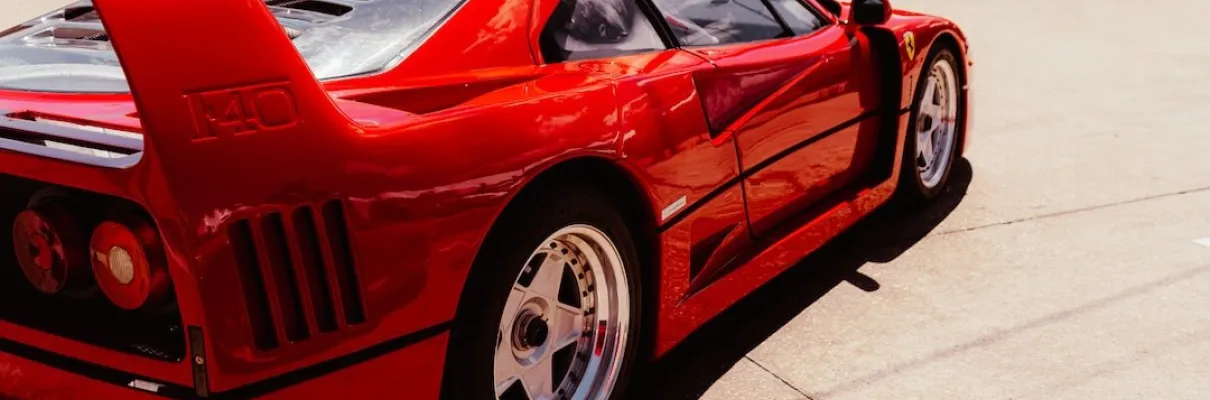
The F40 arrived in 1987 wearing its carbon fiber and Kevlar body, no carpeting, no door handles, Plexiglas side windows, and racing bucket seats. The 89-year-old Enzo Ferrari wanted his 40th anniversary car to repudiate the comfortable, insulated supercars of the era.
As the last production model Enzo Ferrari approved, the twin-turbocharged V8 produced a science fiction-level 478 horsepower and a top speed of 201 mph, the first production car to break that barrier.
American enthusiasts who had watched supercars become increasingly electronic and isolated understood what Ferrari was doing and loved it. The F40 defined the supercar dream for a generation with its unfiltered, slightly terrifying, and absolutely, irreversibly magnificence.
7. Mercedes-Benz 300 SL
The gullwing doors open upward and outward, and a design element born of necessity, not styling preference, and they made the 300 SL instantly iconic. The car needed gullwing doors because the spaceframe chassis sitting high at the sill made conventional doors impossible.
The doors were not the 300 SL's only element of beauty. Its 3.0-liter inline-six borrowed direct fuel injection from the aircraft industry; the first production car engine to do so, which produced extraordinary power for 1954.
American enthusiasts loved it then and now as a vehicle that looks like no other. Like the Ferrari F40, the 300 SL attracts gawkers, and who doesn’t enjoy being the object of a little automotive jealousy?
8. Ferrari 250 GTO
For most American enthusiasts, the 250 GTO exists primarily in the mind, since many have never seen one in person, much less driven one. Only 36 were built between 1962 and 1964, and its current auction record stands at nearly $70 million, safely placing it among the priciest and most famous cars in the world.
But its position among the top 10 greatest cars of all time is fully earned. Its low-slung aluminum body took shape using wind tunnel testing that was rare at the time, resulting in a beautiful yet simple design.
The car performed, winning its racing class at Le Mans, the Tour de France Automobile, and the World Sportscar Championship.
For American enthusiasts, it is the ultimate unattainable vehicle and, perhaps, the most beautiful one.
9. Ford Model T
America's car culture, even the global car culture, began with the Model T, so it belongs among the most famous cars in the world. Before Henry Ford applied the moving assembly in 1913, automobiles were hand-built luxuries. Priced under $300 by the mid-1920s, the Model T made automobiles available to working families.
Though primitive by today’s standards, its planetary transmission was genuinely clever, the high-clearance chassis made sense for the dirt roads of the day, and the average farmer had the tools to fix it themselves.
Without the Model T, the automobile industry might have been steered in an entirely different direction.
10. Volkswagen Beetle
The Beetle earns its place among the most famous cars in the world not based on performance, but on its personality. Ferdinand Porsche's original design focused on practicality. Its rear-mounted air-cooled engine, simple chassis, and rounded shape became a symbol of thrift, individuality, and quiet rebellion. It was arguably the first foreign car to become popular in America, opening a door for many others.
Its distinctive advertising, positioning in Herbie, and its embrace by the counterculture resulted in a vehicle valued for its impression rather than its performance.
Shipping Legendary Cars
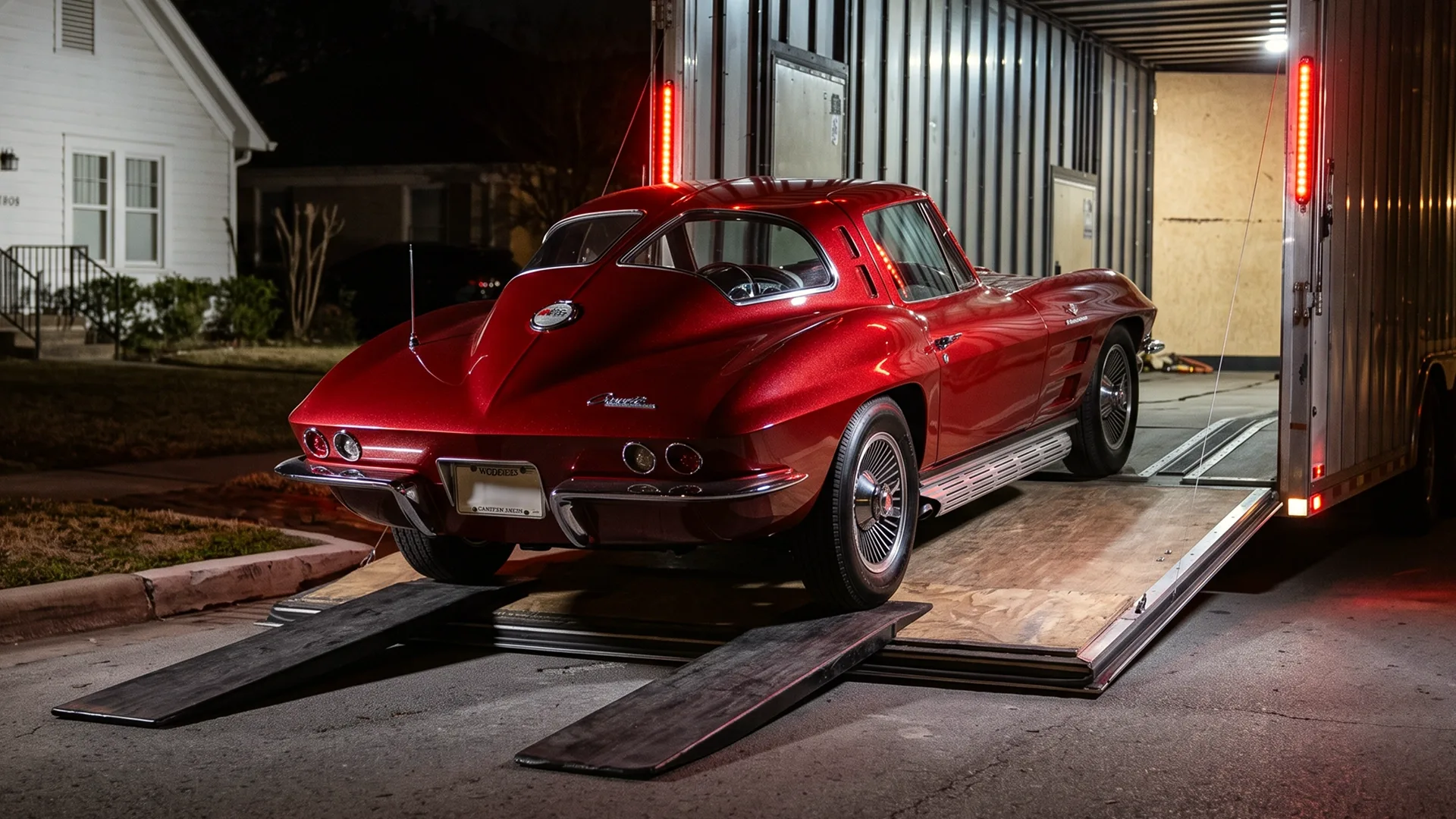
While not all the vehicles on the list are worth more than $1 million apiece, half or more are, and they deserve special treatment when being shipped. They are of sufficient value that they move outside the handling of most automotive transporters and into a different category.
Much of the distinction is that while some of the car transport industry’s premium enclosed carriers used to transport luxury vehicles may offer the physical protection these cars need, most transporters do not offer the insurance protection needed. These models require insurance through specialty insurers like Hagerty, Grundy, or Lloyd's of London.
For their physical transport, iconic models should be moved by dedicated single-vehicle haulers capable of and experienced in handling low-clearance vehicles of exceptional value.
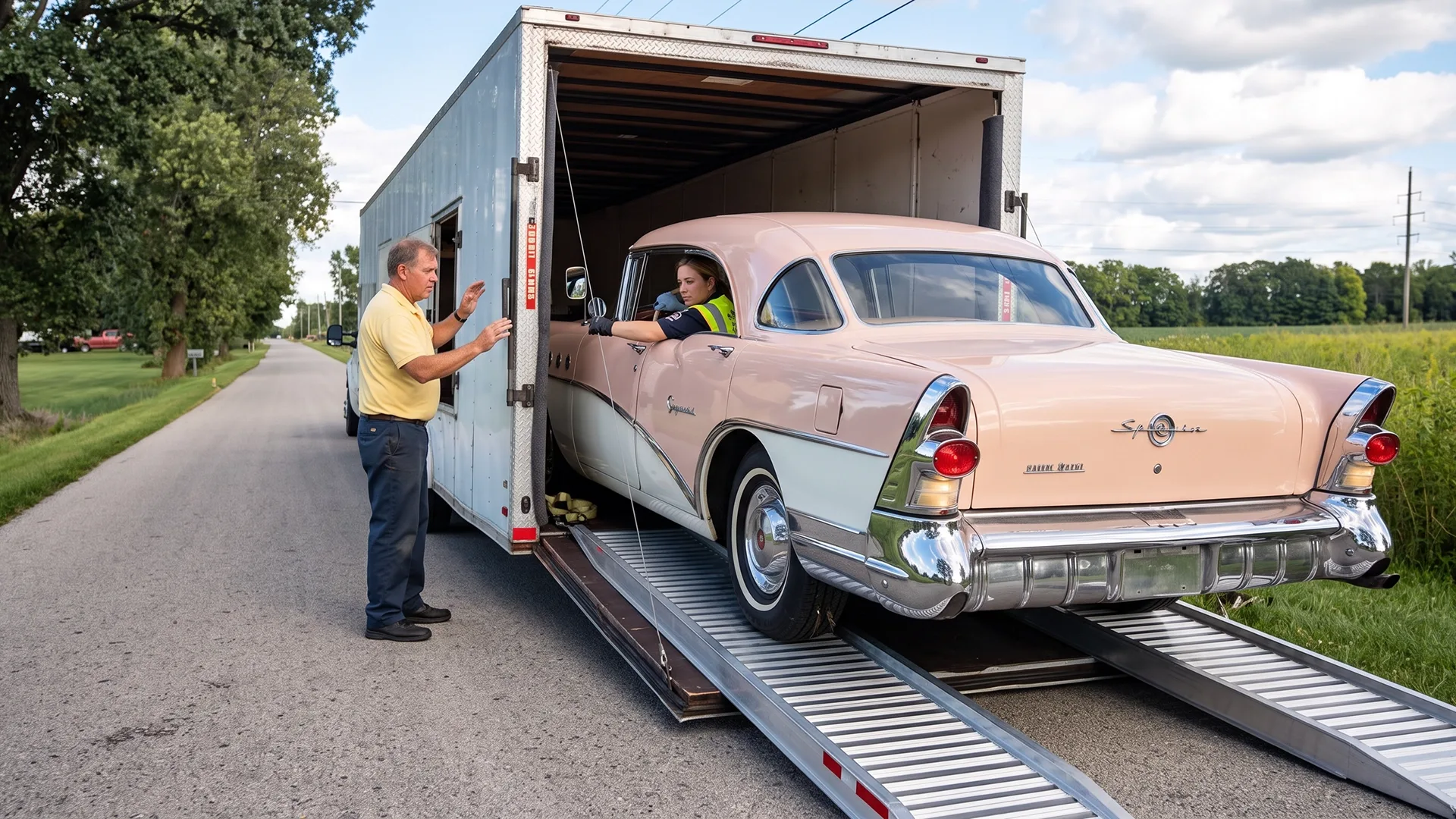
Transporting Your Classic Car
Even if you don’t own one of the most expensive cars on this list, you might own a Model T or another classic that means a great deal to you. To ensure your car arrives safe and sound when transported across the country, consider our team at Nexus Auto Transport.
Request a car shipping quote from us today!
Transport Methods Comparison for Classic Cars
Transport Feature |
Enclosed Transport |
Open Transport |
|---|---|---|
Weather and Elements Protection |
Complete protection from rain, snow, hail, road salt spray, bird droppings |
Vintage paint, chrome, and soft tops are exposed to precipitation and road spray during transit |
Road Debris Risk Level |
Minimal. Vehicle sealed inside trailer with no exposure to gravel, road spray, or debris from passing traffic |
Moderate. Vehicle exposed to gravel chips, road spray, and debris. Risk increases with distance |
Standard Insurance Coverage |
Carrier cargo policies typically cover $100,000 to $500,000 per load. Generally adequate for $15K to $200K classics |
Policies typically cover $100,000 to $250,000. Elevated exposure risk makes claims more likely |
Estimated Price Premium |
40–60% above open transport rates |
Base market rate |
FAQs
What is the maximum insurance coverage provided for high-value classic vehicles?
There isn’t a rule of thumb regarding the maximum insurance protection for high-value classic vehicles. As noted above, these vehicles are insured under specialist policies customized per vehicle that are covered beyond that of the carrier’s cargo insurance policy.
How should I physically prepare my vintage car before the carrier arrives?
Your steps to prepare your vintage car for transport include:
- Thoroughly wash the car to make potential damage apparent
- Photograph and take videos of the full vehicle, including the undercarriage, with time stamps
- Leave 1/4 tank of gas
- Ensure tires are inflated, battery is charged, and vehicle is not leaking
- Prepare a driver information sheet covering quirky elements of starting and driving your vintage vehicle
Will I receive real-time GPS tracking updates while my investment is in transit?
The top auto transport companies provide customers with consistent updates on the status of their vehicles through email, text, and their customer support centers. However, the complications and requirements of interstate shipping generally do not allow real-time tracking. For example, it is illegal for drivers to use their phones while their vehicles are moving.
Be sure to confirm with your car shipping company in advance how they will keep you informed of your car's status.
Are the drivers specifically certified to handle rare manual transmission vehicles?
No. The FMCSA requirements to operate a commercial vehicle focus on the truck and trailer, not the cargo on an auto transport trailer. Short of vetting the individual driver, the best advice is to prepare written or video instructions for the driver if your vehicle has unusual characteristics that drivers may not understand. In addition, you should be present at vehicle pickup and demonstrate these tasks.